

How Long Does an Aluminum Patrol Boat Last in Saltwater Environments?
Qingdao Seastar Sport Equipment’s Aluminum Patrol Boat has become a standard in coastal and inland water operations worldwide, how long can the patrol boat withstand continuous exposure to saltwater environments? Saltwater is notoriously corrosive, and understanding a boat’s longevity is critical for operations ranging from patrol and rescue to water research and management.
Why Aluminum Performs Better in Saltwater
Saltwater attacks metals aggressively through oxidation and galvanic corrosion, which can compromise hull integrity over time. Unlike steel, marine-grade aluminum alloys such as 5083-H116 resist corrosion naturally. These alloys contain elements like magnesium and manganese that create a protective oxide layer when exposed to oxygen, shielding the metal from further chemical attack.
Patrol boats, particularly those constructed with 12/5/4 mm hull plates, combine strength with light weight, reducing stress on the hull while allowing higher speeds and better fuel efficiency. In high-speed operations, such as coastal patrol or smuggling interception, these characteristics ensure the vessel performs reliably without compromising structural safety.
Design Features That Extend Lifespan
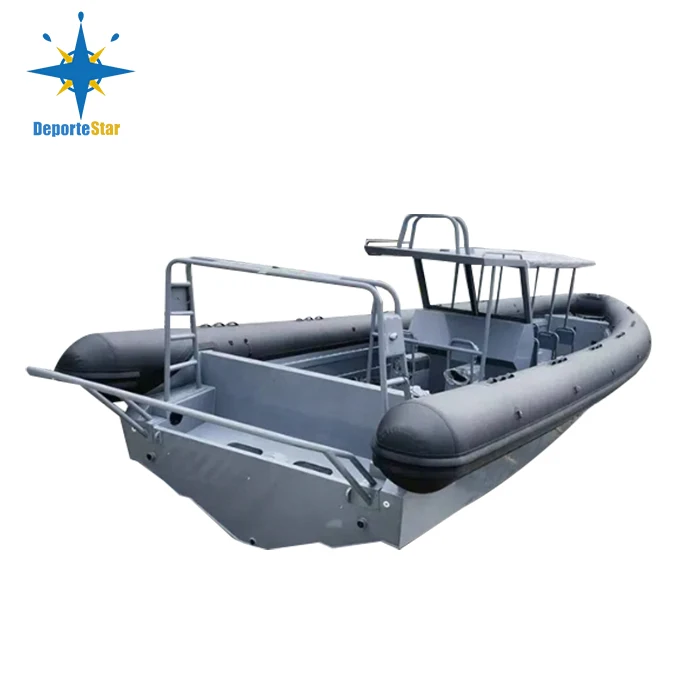
Longevity in the patrol boats is not only about the material but also about design and construction methods. A few key design features make a notable difference:
- Super deep V hull: Reduces hull stress from wave impact and spray, minimizing corrosion exposure.
- Raised bow: Helps prevent seawater from reaching deck fittings and reduces long-term water accumulation on the hull.
- Double aluminum layers with TIG/MIG welding: Reinforces structural integrity while ultrasonic inspection ensures seams are watertight.
- Integrated fuel tanks with cutoff valves and inspection hoses: Prevent internal corrosion caused by fuel leaks and reduce maintenance risks.
- Non-skid flooring and flush-mounted fittings: Protect the deck and hull from scratches and salt buildup, which are common corrosion initiation points.
These design choices, paired with marine-grade coatings and anodized or powder-coated finishes, significantly improve lifespan even under demanding saltwater conditions.
How Long Can it Lasts?
Real-world evidence from operators using aluminum patrol boats in diverse conditions shows that these vessels can have remarkably long lifespans when properly maintained. Depending on hull thickness, environmental exposure, and operational intensity, expected service life ranges between 15 and 30 years.
- Light-use recreational patrols: 15–20 years
- Standard patrol, fishing, and research vessels: 20–25 years
- Heavy-duty high-speed or rescue boats: 25–30 years
Table: Lifespan vs. Hull Thickness and Use
| Hull Thickness (mm) | Usage Type | Estimated Lifespan (Years) |
| 4 | Light recreational use | 15–20 |
| 5 | Standard patrol/fishing | 20–25 |
| 12 | High-speed patrol/rescue | 25–30 |
The key takeaway is that even a relatively thin aluminum hull, if made of 5083-H116 marine alloy and supported by proper design, can achieve decades of safe operation with routine care.
Maintenance Practices That Make a Difference
Longevity is not achieved by material alone. Maintenance practices are critical in ensuring that patrol boats continue to perform in saltwater environments.
- Freshwater Rinse After Every Trip: Removing salt residues from the hull, tubes, and deck prevents long-term oxidation.
- Regular Inspection of Weld Seams and Fittings: Checking for early signs of corrosion or fatigue can prevent structural failure.
- Protective Coatings and Anodizing: Applying or refreshing marine-grade coatings provides an additional barrier against saltwater.
- Bilge and Drainage Management: Ensuring self-draining systems are operational prevents standing water, which accelerates corrosion.
- Sacrificial Anode Replacement: patrol boats often use zinc or aluminum anodes to protect the hull; these need periodic inspection and replacement.
Table 3: Recommended Maintenance Schedule
| Task | Frequency |
| Rinse hull and tubes | After every outing |
| Inspect weld seams & fittings | Every 3 months |
| Lubricate steering system | Every 6 months |
| Check & replace sacrificial anodes | Annually |
| Overall hull inspection | Annually |
These simple routines can add years to a boat's operational life while preserving speed, stability, and safety.
Real-World Applications
Aluminum patrol boats are widely deployed in roles where performance and durability are critical. They are used for:
- Coastal patrol and anti-smuggling operations – high-speed interception with minimal hull wear
- Environmental monitoring and research – long hours on water with heavy scientific equipment
- Rescue missions – fast response, reliable structural integrity, and safe deck design
- Leisure and fishing operations – comfort, stability, and corrosion resistance for repeated outings
Operators report that properly maintained patrol boats maintain hull integrity, engine performance, and operational safety even after thousands of hours in saltwater conditions, demonstrating that longevity is not just theoretical but practical.
Accessories and Features That Enhance Durability
Additional accessories enhance durability and operational efficiency:
- ORCA® Hypalon or Valmex® PVC tubes resist UV and chemical degradation
- Built-in electric bilge pumps ensure rapid water removal
- Lockable bow lockers and stainless-steel sunshades protect equipment and passengers
- Integrated fuel tanks and automatic valves prevent leaks and internal corrosion
These features, combined with quality aluminum construction, make the Patrol Boat highly resilient in saltwater environments.
Aluminum patrol boats constructed with marine-grade alloys, reinforced hulls, and thoughtful design can reliably operate in saltwater for 15–30 years, depending on usage and maintenance. By combining structural integrity, corrosion-resistant materials, and practical design, these vessels provide a durable, high-performance solution for coastal patrol, rescue operations, and recreational activities. Qingdao Seastar Sport Equipment's Patrol Boat exemplifies how longevity, safety, and operational efficiency can coexist in even the harshest marine conditions, proving that with proper care, patrol boats are a long-term investment in reliability.